

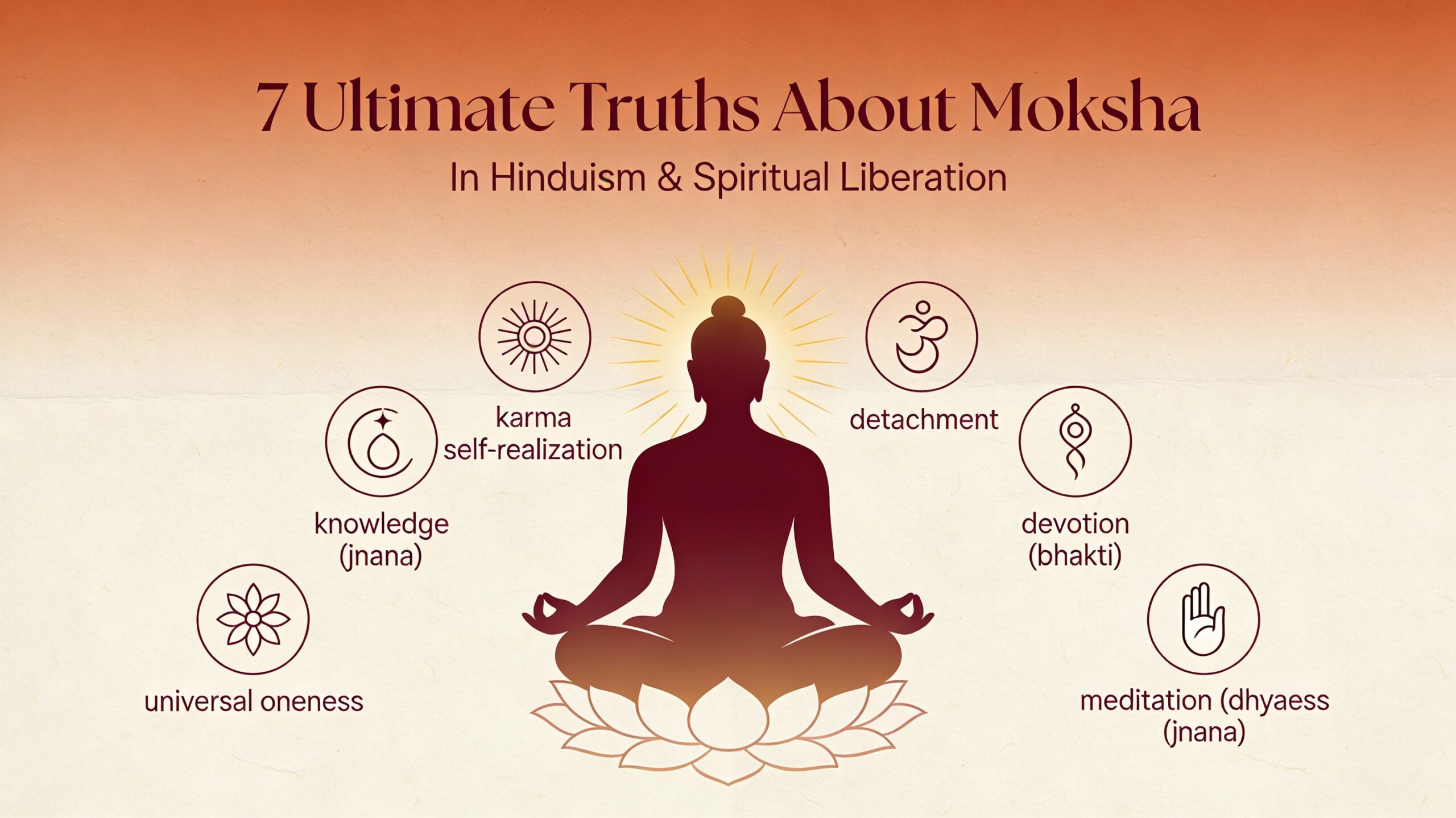
Moksha in Hinduism – The Ultimate Guide to Spiritual Liberation
Introduction
Moksha in Hinduism is the ultimate spiritual goal of human life. From ancient scriptures like the Upanishads and Bhagavad Gita to modern spiritual teachings, Moksha represents freedom of the soul from the endless cycle of birth, death, and rebirth.
Many people today search for the true meaning of Moksha in Hinduism, especially during times of loss, spiritual confusion, or when performing last rites for loved ones. Understanding Moksha helps one live a meaningful, balanced, and spiritually aware life.
What Is Moksha in Hinduism?
In Hindu philosophy, Moksha in Hinduism means the liberation of the soul (Atma) from Samsara, the continuous cycle of birth (Janma), death (Mrityu), and rebirth (Punarjanma).
When a soul attains Moksha:
- It is freed from all karmic bonds
- It no longer takes rebirth
- It merges with supreme consciousness (Brahman)
- It experiences eternal peace and bliss
Unlike heaven (Swarga), which is temporary, Moksha is permanent liberation.
Meaning of Moksha According to Hindu Scriptures
Hinduism teaches that life is not random. Every soul carries karmic impressions from past lives. MoThe meaning of Moksha is explained in various Hindu texts:
- Upanishads describe Moksha as realization of the true Self
- Bhagavad Gita teaches liberation through devotion, action, and knowledge
- Puranas emphasize Moksha prapti through righteous living and rituals
All scriptures agree that Moksha in Hinduism is achieved by dissolving ego and ignorance.
Why Is Moksha Important in Hinduism?
Hinduism defines four major life goals known as Purusharthas:
- Dharma – righteous duty
- Artha – material prosperity
- Kama – desires and enjoyment
- Moksha – spiritual liberation
Among these, Moksha in Hinduism is considered the highest because it frees the soul forever. Without Moksha, the soul continues to experience suffering through repeated births.
Different Paths to Moksha in Hinduism
Hindu philosophy offers multiple paths so that every individual can attain Moksha according to their nature.
🔹 Karma Yoga – Path of Action
Selfless service without attachment to results purifies karma and leads to Moksha prapti.
🔹 Bhakti Yoga – Path of Devotion
Loving devotion toward God through prayer, chanting, and surrender is one of the easiest paths to Moksha in Hinduism.
🔹 Jnana Yoga – Path of Knowledge
By realizing the difference between the eternal soul and temporary body, one attains spiritual liberation.
🔹 Raja Yoga – Path of Meditation
Through meditation, discipline, and control of the mind, one reaches self-realization and Moksha.hly life.
Moksha After Death: What Happens to the Soul?
According to Hindu beliefs:
- After death, the soul leaves the physical body
- Proper funeral rituals like Antyeshti, Pind Daan, and Shraddha help the soul’s journey
- If all karmas are exhausted, the soul attains Moksha and does not return
Thus, rituals play an important role in supporting Moksha after death
How Can One Attain Moksha in Daily Life?
Achieving Moksha in Hinduism is not limited to saints alone. A householder can also progress by:
- Living truthfully and ethically
- Performing duties with detachment
- Practicing meditation, japa, and self-reflection
- Respecting elders, ancestors, and spiritual traditions
Moksha prapti is a gradual spiritual evolution.
Conclusion
Moksha in Hinduism is not just about life after death—it is about living with awareness, compassion, and spiritual wisdom. By understanding the meaning of Moksha and following dharma, every individual can move closer to liberation and eternal peace.
In Hindu belief, the soul’s journey toward liberation is supported by proper rituals and spiritual understanding. Performing sacred rites such as अध्यात्म तत्व ज्ञान क्या है? helps the soul detach from the physical body and move peacefully toward its next destination. Ancient scriptures like the Bhagavad Gita on Moksha explain that true liberation comes when one is freed from karmic bondage through selfless action, devotion, and spiritual wisdom.


Pingback: 7 Powerful Truths About Life After Death in Hinduism (Scriptural Guide)