

By Moksh Prapti | Category: Temples, Spirituality & Sacred Travel
🪷 Introduction
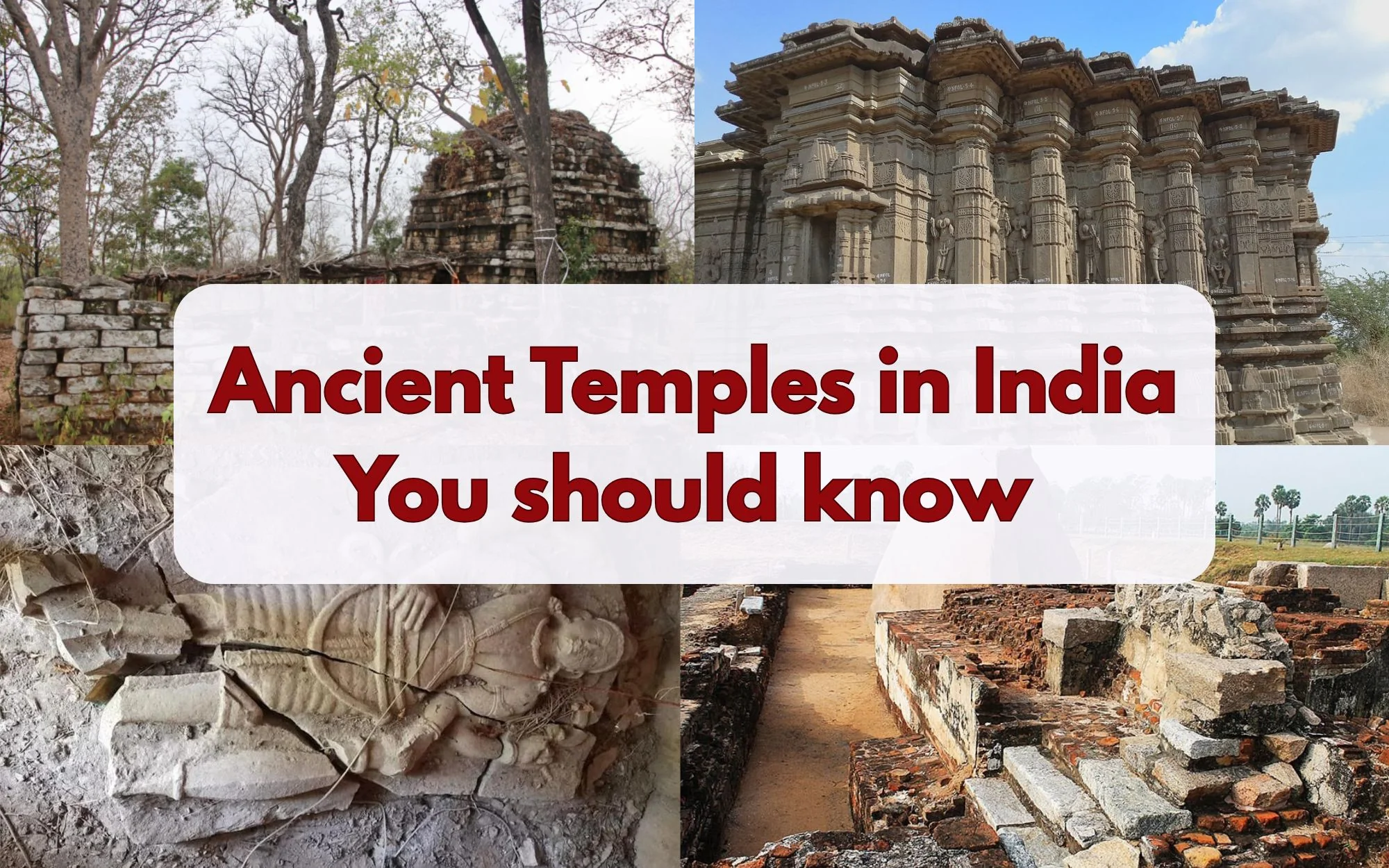
India is not just a country — it is a living, breathing civilisation that has been praying, meditating, and seeking the divine for thousands of years. And nowhere is this more visible than in its ancient temples.
The ancient temples in India are not merely architectural marvels. They are energy centres, philosophical texts carved in stone, and portals to a deeper understanding of life, consciousness, and the eternal Self. Whether you stand before the towering gopuram of a South Indian temple or walk the ghats of Varanasi at dawn, something shifts inside you — something ancient stirs awake.
At Moksh Prapti, we believe that visiting these sacred spaces is not just tourism. It is a step on the path toward liberation.
🕉️ Why Ancient Temples in India Still Matter Today
We live in an age of speed. Notifications, deadlines, social media — the modern mind rarely gets a moment of stillness. Yet millions of people across the world are now turning toward India’s ancient temples, not out of religious obligation, but out of a deep inner hunger for meaning and peace.
These temples were built by sages and kings who understood something we are only beginning to rediscover — that architecture itself can be a spiritual tool. The proportions, the geometry, the chants echoing off stone walls — all of it was designed with one purpose in mind: to help a human being go inward.
वेदांत कहता है कि जब बाहर की यात्रा भीतर की यात्रा बन जाए, तभी तीर्थ सार्थक होता है।
🌿 7 Ancient Temples in India That Will Transform You Within
1️⃣ Kashi Vishwanath Temple, Varanasi — Where Time Dissolves
Varanasi is perhaps the oldest living city in the world, and Kashi Vishwanath stands at its very heart. Dedicated to Lord Shiva, this temple has been a centre of spiritual learning and liberation for millennia. The Vedantic teaching of Tattvamasi — “Thou art That” — finds its most potent expression here, where life and death dance together on the ghats every single day.
Visiting Kashi is not just a religious act. It is a confrontation with impermanence — and in that confrontation, true freedom begins.
2️⃣ Brihadeeswarar Temple, Thanjavur — A Stone Symphony of Consciousness
Built by Raja Raja Chola I in the 11th century, the Brihadeeswarar Temple in Tamil Nadu is an engineering wonder that no modern machine fully understands. The massive shadow of its vimana (tower) never falls on the ground — a detail that still puzzles architects today.
This temple is dedicated to Shiva as the cosmic dancer, Nataraja — a metaphor Vedanta uses beautifully to explain how the universe itself is the dance of pure consciousness. Standing here, one begins to feel that life is not a problem to be solved, but a rhythm to be felt.
3️⃣ Konark Sun Temple, Odisha — Time, Light, and the Eternal Now
The Konark Sun Temple is built in the shape of a massive chariot drawn by seven horses — representing the seven days of the week and the eternal movement of time. Every wall, every wheel, every sculpture is a lesson in cosmology and human experience.
Vedanta teaches that the body is a chariot, the intellect the charioteer, and the Self the silent passenger. Konark makes this philosophy visible, tangible, and breathtakingly beautiful.
4️⃣ Meenakshi Amman Temple, Madurai — The Divine Feminine Awakens
With its fourteen colorful gopurams and over 33,000 sculptures, the Meenakshi Temple in Madurai is a universe unto itself. Dedicated to Goddess Meenakshi — a form of Parvati — this temple celebrates Shakti, the primal feminine energy that underlies all creation.
In Vedantic understanding, the universe is not matter — it is consciousness in expression. The Meenakshi Temple brings this alive not through words, but through the sheer overwhelming beauty of the sacred feminine.
5️⃣ Kedarnath Temple, Uttarakhand — Silence at 3,583 Metres
Perched high in the Himalayas, the Kedarnath Temple is not for the faint of heart — and that is exactly the point. The journey itself is the teaching. Every difficult step upward becomes a meditation on surrender, effort, and grace.
Dedicated to Lord Shiva, Kedarnath strips away the unnecessary. The cold, the altitude, the raw silence of the mountains — all of it conspires to bring you face to face with yourself. This is Vedanta not read in a book, but lived in the body.
6️⃣ Somnath Temple, Gujarat — Rebuilt Seven Times, Still Standing
Perhaps no temple in India carries as much history — or as much resilience — as Somnath. Destroyed and rebuilt seven times over centuries, Somnath is a testament to the unbreakable spirit of a civilisation rooted in dharma.
The teaching here is Vedantic at its core: the body may fall, structures may crumble, but the Self — like Somnath — always rises again. You cannot destroy what is eternal.
7️⃣ Tirupati Balaji Temple, Andhra Pradesh — Devotion Beyond Reason
The Tirumala Venkateswara Temple at Tirupati is the most visited place of worship on earth. Millions arrive every year — not because they are told to, but because something in them simply pulls them there.
Devotion, Vedanta teaches, is not weakness. Bhakti is one of the most powerful paths to self-realization. When the heart opens completely in love and surrender, the ego dissolves naturally — and what remains is pure awareness.
🔥 What Ancient Temples in India Teach Us About Life
Every ancient temple in India is a textbook of Vedantic wisdom expressed in stone, ritual, and sacred geometry. Together, they teach:
- That the Self is eternal — beyond birth, death, and the shifting circumstances of life
- That beauty is a path to truth — and art created in devotion carries a different kind of power
- That silence is not empty — it is full of the presence we spend our whole lives searching for
- That pilgrimage is transformation — not just travel from one place to another, but from one version of yourself to a deeper one
🧘 How Moksh Prapti Guides You on This Journey
At Moksh Prapti, our purpose is simple — to help modern seekers find their way back to themselves. The ancient temples in India are not relics of the past. They are living invitations to wake up, to go deeper, and to remember who you truly are.
Whether you are drawn to the Vedantic philosophy of non-duality, the devotional path of Bhakti, or simply a feeling that there must be more to life than what the surface offers — the temples of India are waiting for you.
वेदांत की यात्रा पुस्तकों से शुरू हो सकती है, लेकिन पूर्णता मंदिरों की चौखट पर, उस मौन में मिलती है जहाँ शब्द खत्म होते हैं।
🌈 Conclusion
The ancient temples in India are more than stone and sculpture. They are mirrors — and when you stand before them with an open heart, what you see reflected is not the world outside, but the vast, silent awareness that has always lived within you.
That is the real pilgrimage. That is Moksh Prapti.

