

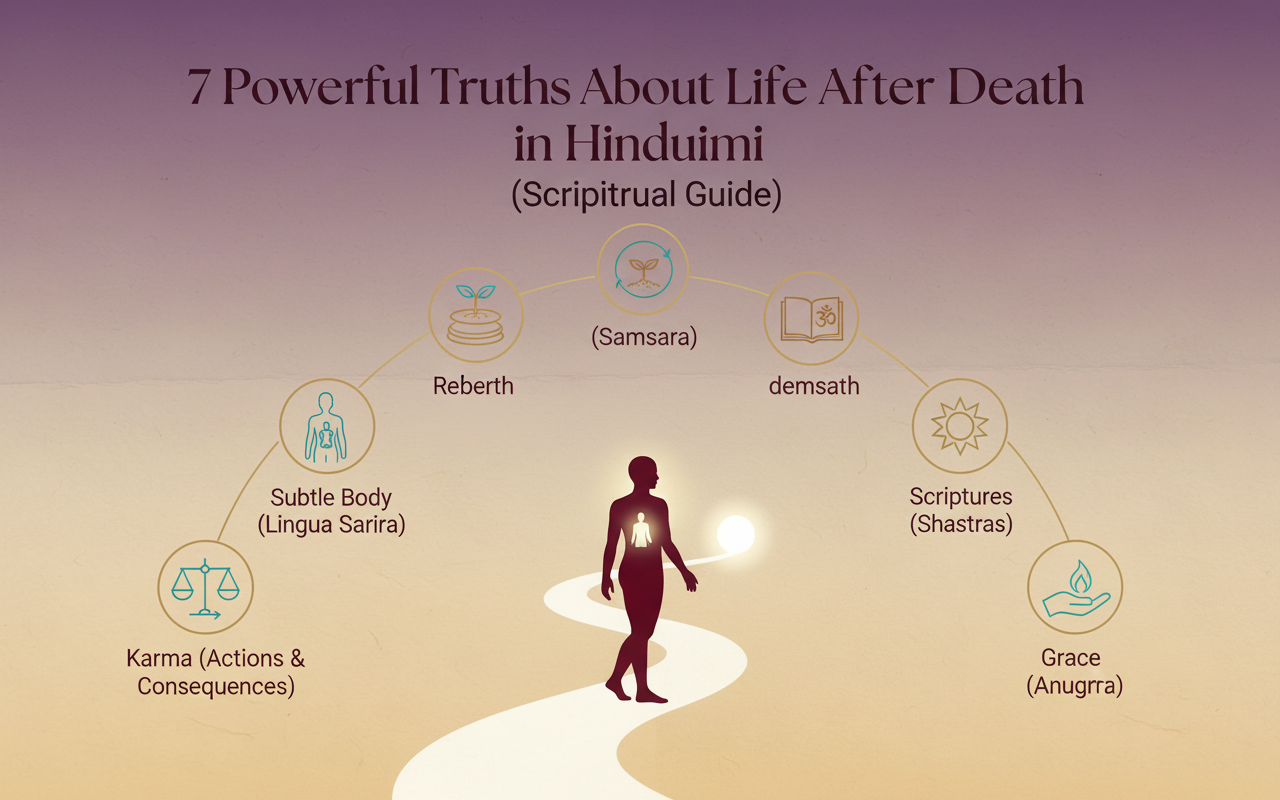
Life After Death in Hinduism: Soul Journey According to Scriptures
Introduction
Life after death in Hinduism is not a mystery filled with fear, but a deeply spiritual and well-structured journey explained in ancient scriptures. Hindu philosophy teaches that death is not the end of existence—it is merely the transition of the soul (Atma) from one form to another.
Many people seek answers about what happens after death, especially during times of loss. Understanding life after death in Hinduism brings clarity, peace, and acceptance by revealing the eternal nature of the soul.
Is There Life After Death in Hinduism?
According to Hindu scriptures, the soul is:
- Eternal (Nitya)
- Indestructible (Avinashi)
- Beyond birth and death
The body perishes, but the soul continues its journey based on karma and spiritual awareness.
भगवद गीता में स्पष्ट कहा गया है —
“आत्मा न जन्म लेती है, न मरती है।”
The Soul’s Journey After Death in Hinduism
The journey of the soul after death follows a divine law governed by karma.
🔹 Separation from the Body
At death, the soul leaves the physical body. Consciousness withdraws, and the soul carries subtle impressions (sanskaras) from past actions.
🔹 Role of Karma
Good and bad deeds determine the soul’s next destination:
- Higher realms (Lokas)
- Rebirth on earth
- Liberation (Moksha)
This karmic balance decides life after death in Hinduism.
Role of Funeral Rituals in the Soul’s Journey
Hinduism emphasizes proper death rituals to support the soul’s peaceful transition.
Sacred rites such as Hindu Antyeshti rituals help:
- Detach the soul from the physical body
- Remove emotional attachments
- Guide the soul forward without obstacles
Improper or incomplete rites are believed to delay the soul’s journey.
Scriptural Views on Life After Death in Hinduism
🔹 Bhagavad Gita
The Gita explains that the soul changes bodies just as a person changes clothes.
Scriptural reference:
Bhagavad Gita on the Eternal Soul
🔹 Garuda Purana
The Garuda Purana describes:
- The soul’s experiences after death
- Judgment of karma
- Importance of Shraddha and Pind Daan
It gives a detailed map of life after death in Hinduism.
🔹 Upanishads
Upanishads teach that realization of the Self leads to freedom from rebirth.
Rebirth vs Moksha: Two Paths After Death
After death, the soul follows one of two paths:
Rebirth
If desires and karmas remain:
- The soul is reborn
- Continues spiritual evolution
Moksha
If ignorance dissolves:
- The soul attains liberation
- No further birth occurs
Learn more in our detailed guide on Moksha in Hinduism.
Can the Living Help the Soul After Death?
Yes. Hinduism teaches that family members can assist the soul through:
- Antyeshti
- Pind Daan
- Shraddha rituals
- Prayers and charity
These acts generate positive spiritual energy and peace for the departed soul.
Why Understanding Life After Death in Hinduism Matters
Knowing the truth about death:
- Reduces fear
- Encourages ethical living
- Strengthens spiritual awareness
- Helps accept loss peacefully
जीवन और मृत्यु दोनों को समझना ही सच्ची बुद्धि है।
Conclusion
Life after death in Hinduism is a continuation of the soul’s sacred journey, guided by karma, awareness, and divine law. Death is not an end but a doorway to transformation. When this truth is understood, life becomes meaningful, conscious, and spiritually aligned.
मृत्यु अंत नहीं, बल्कि आत्मा की यात्रा का एक चरण है।
📌 Author & SEO Info
Author: Sandeep Kumar
Category: Soul Journey & Moksha
SEO Keywords Used Naturally:
Soul after death, rebirth in Hinduism, karma and rebirth, Moksha, Garuda Purana, Hindu beliefs on death
Hindu scriptures explain that the soul’s journey does not end with death but continues according to karma and spiritual awareness. For a deeper understanding of this journey, read our detailed guide on 7 Ultimate Truths About Moksha in Hinduism & Spiritual Liberation, which explains rebirth, Moksha, and the soul’s path after leaving the body.
Ancient texts like the Bhagavad Gita on the Eternal Soul clearly state that the soul changes bodies just as a person changes clothes, reinforcing the Hindu belief in life beyond physical death.

