सत् Spirituality & Religion

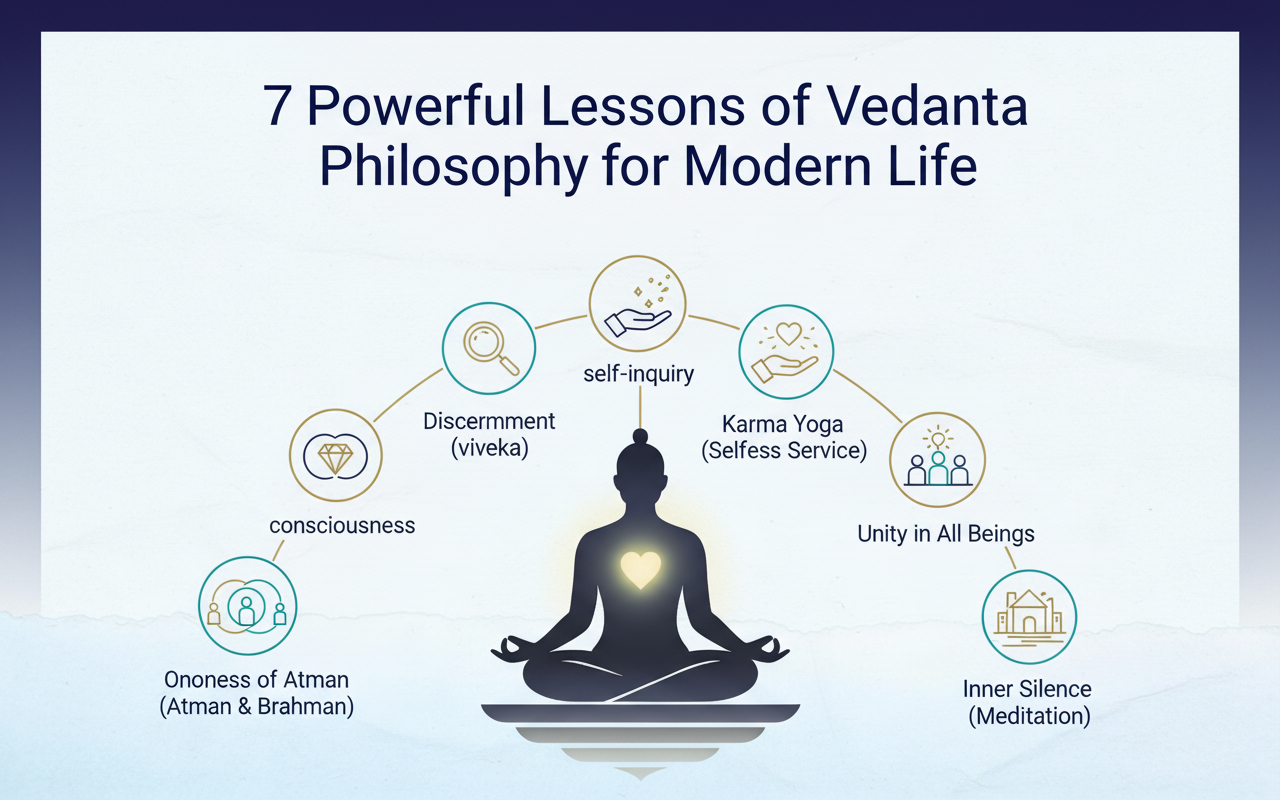
7 Powerful Lessons of Vedanta Philosophy for Modern Life

7 Powerful Lessons of Vedanta Philosophy for Modern Life

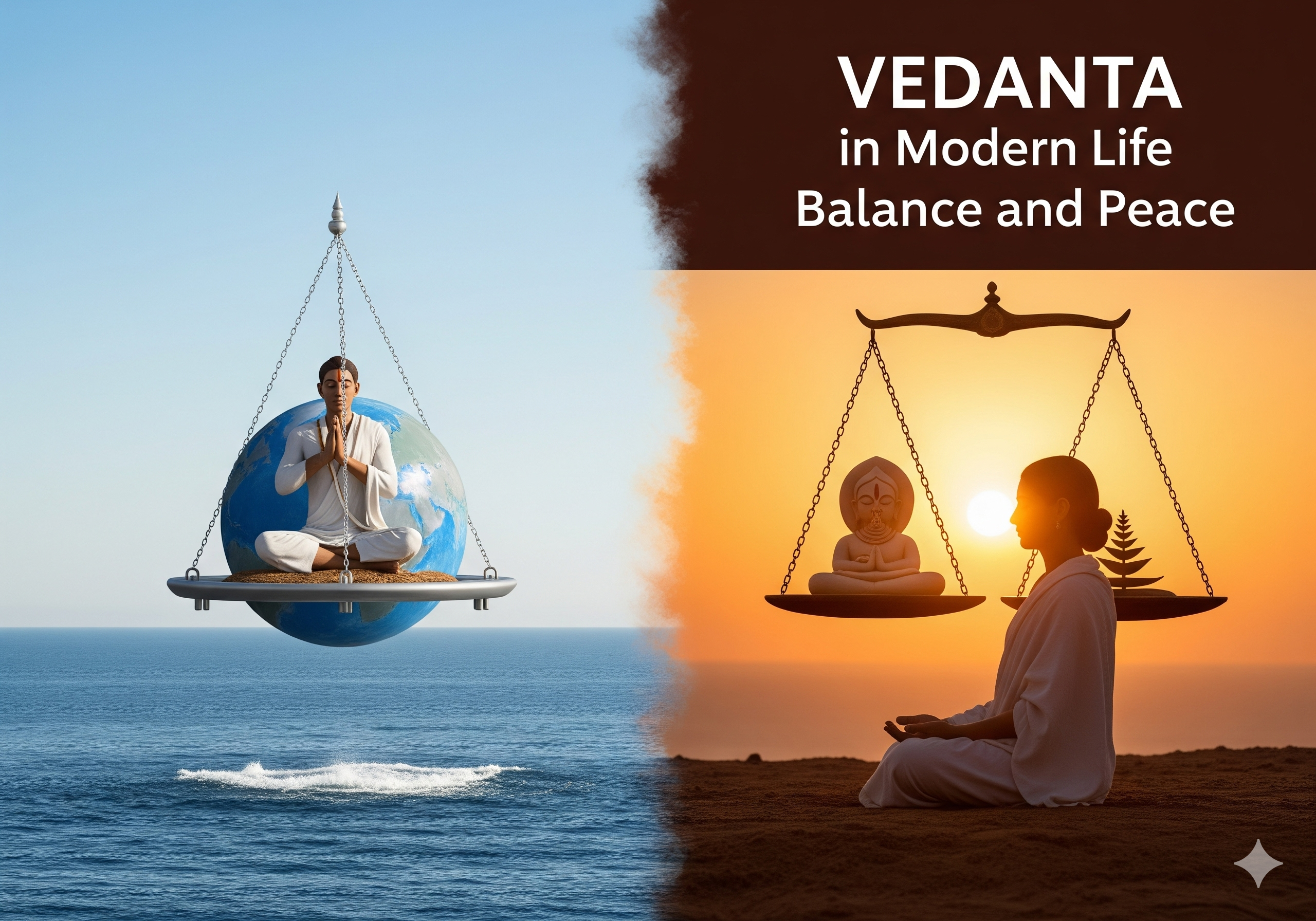
🌸 Vedanta Philosophy Explained for Modern Life 🪷 Introduction Vedanta philosophy for modern life offers timeless wisdom to address today’s stress, confusion, and emotional imbalance. In an age of constant competition, digital overload, and material pursuit, many people feel disconnected from inner peace. Vedanta reminds us that true fulfillment does not come from the outside world but from understanding our inner reality. वेदांत दर्शन आधुनिक जीवन के लिए एक ऐसा मार्ग है जो बाहरी भागदौड़ के बीच भी शांति और स्पष्टता प्रदान करता है। 🕉️ What Is Vedanta Philosophy? (H2) Vedanta is one of the most profound schools of Hindu philosophy, rooted in the Upanishads, Bhagavad Gita, and Brahma Sutras. The word Vedanta means “the end of the Vedas,” signifying the ultimate knowledge of existence. The core teaching of Vedanta is simple yet powerful: This understanding forms the foundation of Vedanta philosophy for modern life. 🌿 Why Vedanta Philosophy Is Relevant Today (H2) Modern society has achieved material success but often lacks inner contentment. Anxiety, depression, and fear have become common despite comfort and convenience. Vedanta philosophy for modern life addresses this imbalance by shifting focus inward. Vedanta teaches: वेदांत हमें सिखाता है कि बाहरी परिस्थितियाँ नहीं, बल्कि हमारी समझ ही हमारे दुख और सुख का कारण है। 🌞 7 Powerful Lessons of Vedanta Philosophy for Modern Life (H2) 1️⃣ You Are Not Your Thoughts (H3) Vedanta explains that thoughts come and go, but the observer remains unchanged. Recognizing this reduces stress and emotional reactivity. 2️⃣ True Happiness Comes from Within (H3) External achievements provide temporary joy, while inner awareness offers lasting peace. 3️⃣ Detachment Brings Freedom (H3) Vedanta encourages performing duties without attachment to outcomes, reducing anxiety and disappointment. 4️⃣ Ego Is the Root of Suffering (H3) The ego creates separation and fear. Vedanta dissolves ego through self-knowledge. 5️⃣ Meditation Is Essential (H3) Meditation quiets the mind and allows direct experience of the Self, making Vedanta practical for daily life. 6️⃣ Service Purifies the Mind (H3) Selfless service (Seva) reduces ego and strengthens compassion. 7️⃣ Awareness Transforms Everyday Life (H3) Living consciously turns ordinary activities into spiritual practice. 🔥 Vedanta, Karma, and Life’s Challenges (H2) Vedanta teaches that life’s challenges are shaped by karma, not punishment. By understanding karma, one responds with wisdom instead of resistance. This outlook helps modern individuals face difficulties with acceptance and strength. Vedanta encourages learning from experiences rather than escaping them. 🧘 Vedanta and Moksha: The Ultimate Goal (H2) The ultimate aim of Vedanta is Moksha, liberation from ignorance and suffering. Moksha is not achieved by abandoning life but by understanding it deeply. To explore the spiritual journey after death, read our guide on Life After Death in Hinduism. According to the Bhagavad Gita on Self-Knowledge, the Self is eternal and unaffected by change. 🌺 Applying Vedanta Philosophy in Daily Life (H2) Vedanta philosophy for modern life can be practiced by: वेदांत जीवन से भागने का नहीं, बल्कि उसे सही दृष्टि से जीने का मार्ग है। 🌈 Conclusion Vedanta philosophy for modern life bridges ancient wisdom and contemporary living. It teaches that peace is not something to be achieved in the future—it is your true nature here and now. By applying Vedantic principles, one can live with clarity, balance, and spiritual fulfillment even in the midst of modern challenges. वेदांत हमें जीवन को समझने की दृष्टि देता है, जिससे जीवन स्वयं साधना बन जाता है। 📌 Author & SEO Info Author: Sandeep KumarCategory: Vedanta & Consciousness SEO Keywords Used Naturally:Vedanta philosophy, modern spirituality, self-realization, consciousness, meditation, Moksha, awareness Vedanta philosophy for modern life becomes truly practical when inner awareness is awakened alongside daily responsibilities. For readers seeking a deeper experiential understanding, our guide on 7 Powerful Truths of Modern Self-Awakening through Vedanta explains how Vedantic wisdom can be applied step by step to cultivate clarity, peace, and self-realization in everyday modern living.

7 Powerful Lessons of Vedanta Philosophy for Modern Life Read More »

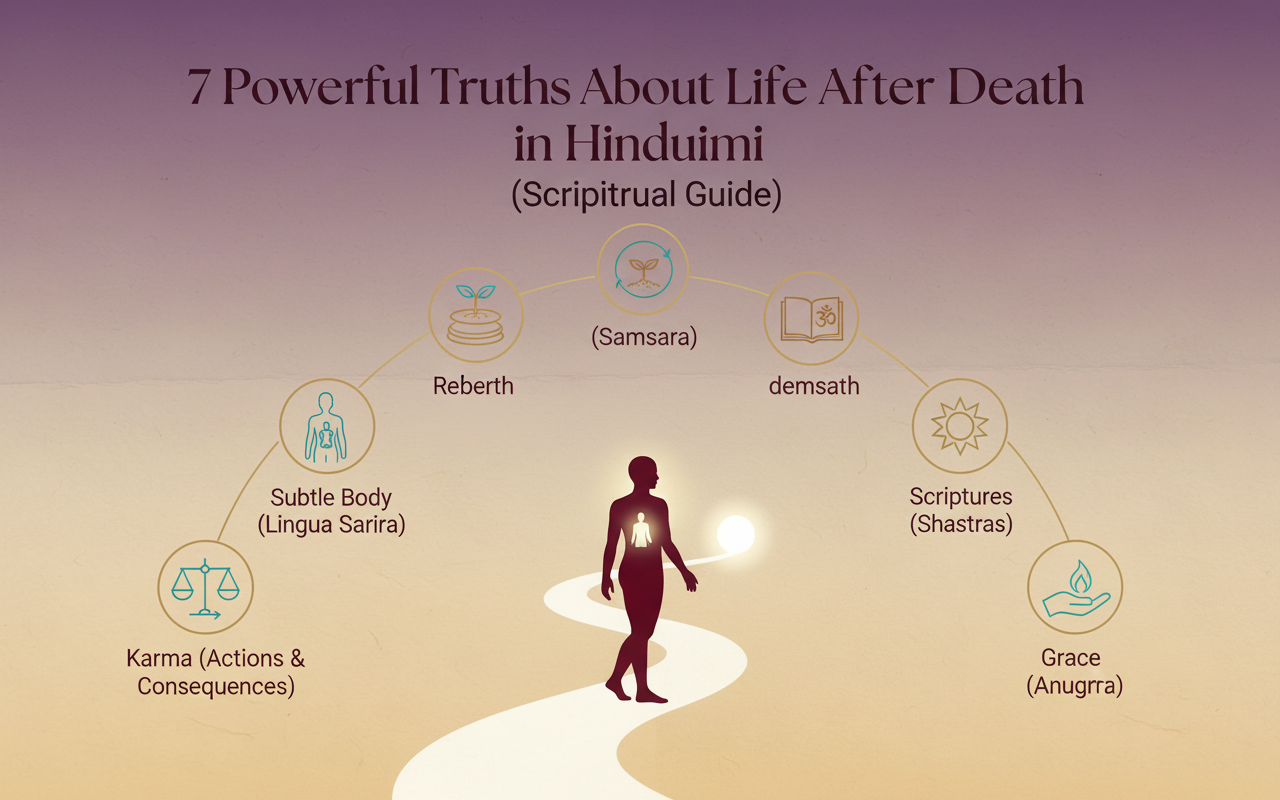
7 Powerful Truths About Life After Death in Hinduism (Scriptural Guide)

7 Powerful Truths About Life After Death in Hinduism (Scriptural Guide)

Life After Death in Hinduism: Soul Journey According to Scriptures Introduction Life after death in Hinduism is not a mystery filled with fear, but a deeply spiritual and well-structured journey explained in ancient scriptures. Hindu philosophy teaches that death is not the end of existence—it is merely the transition of the soul (Atma) from one form to another. Many people seek answers about what happens after death, especially during times of loss. Understanding life after death in Hinduism brings clarity, peace, and acceptance by revealing the eternal nature of the soul. Is There Life After Death in Hinduism? According to Hindu scriptures, the soul is: The body perishes, but the soul continues its journey based on karma and spiritual awareness. भगवद गीता में स्पष्ट कहा गया है —“आत्मा न जन्म लेती है, न मरती है।” The Soul’s Journey After Death in Hinduism The journey of the soul after death follows a divine law governed by karma. 🔹 Separation from the Body At death, the soul leaves the physical body. Consciousness withdraws, and the soul carries subtle impressions (sanskaras) from past actions. 🔹 Role of Karma Good and bad deeds determine the soul’s next destination: This karmic balance decides life after death in Hinduism. Role of Funeral Rituals in the Soul’s Journey Hinduism emphasizes proper death rituals to support the soul’s peaceful transition. Sacred rites such as Hindu Antyeshti rituals help: Improper or incomplete rites are believed to delay the soul’s journey. Scriptural Views on Life After Death in Hinduism 🔹 Bhagavad Gita The Gita explains that the soul changes bodies just as a person changes clothes. Scriptural reference:Bhagavad Gita on the Eternal Soul 🔹 Garuda Purana The Garuda Purana describes: It gives a detailed map of life after death in Hinduism. 🔹 Upanishads Upanishads teach that realization of the Self leads to freedom from rebirth. Rebirth vs Moksha: Two Paths After Death After death, the soul follows one of two paths: Rebirth If desires and karmas remain: Moksha If ignorance dissolves: Learn more in our detailed guide on Moksha in Hinduism. Can the Living Help the Soul After Death? Yes. Hinduism teaches that family members can assist the soul through: These acts generate positive spiritual energy and peace for the departed soul. Why Understanding Life After Death in Hinduism Matters Knowing the truth about death: जीवन और मृत्यु दोनों को समझना ही सच्ची बुद्धि है। Conclusion Life after death in Hinduism is a continuation of the soul’s sacred journey, guided by karma, awareness, and divine law. Death is not an end but a doorway to transformation. When this truth is understood, life becomes meaningful, conscious, and spiritually aligned. मृत्यु अंत नहीं, बल्कि आत्मा की यात्रा का एक चरण है। 📌 Author & SEO Info Author: Sandeep KumarCategory: Soul Journey & Moksha SEO Keywords Used Naturally:Soul after death, rebirth in Hinduism, karma and rebirth, Moksha, Garuda Purana, Hindu beliefs on death Hindu scriptures explain that the soul’s journey does not end with death but continues according to karma and spiritual awareness. For a deeper understanding of this journey, read our detailed guide on 7 Ultimate Truths About Moksha in Hinduism & Spiritual Liberation, which explains rebirth, Moksha, and the soul’s path after leaving the body. Ancient texts like the Bhagavad Gita on the Eternal Soul clearly state that the soul changes bodies just as a person changes clothes, reinforcing the Hindu belief in life beyond physical death.

7 Powerful Truths About Life After Death in Hinduism (Scriptural Guide) Read More »

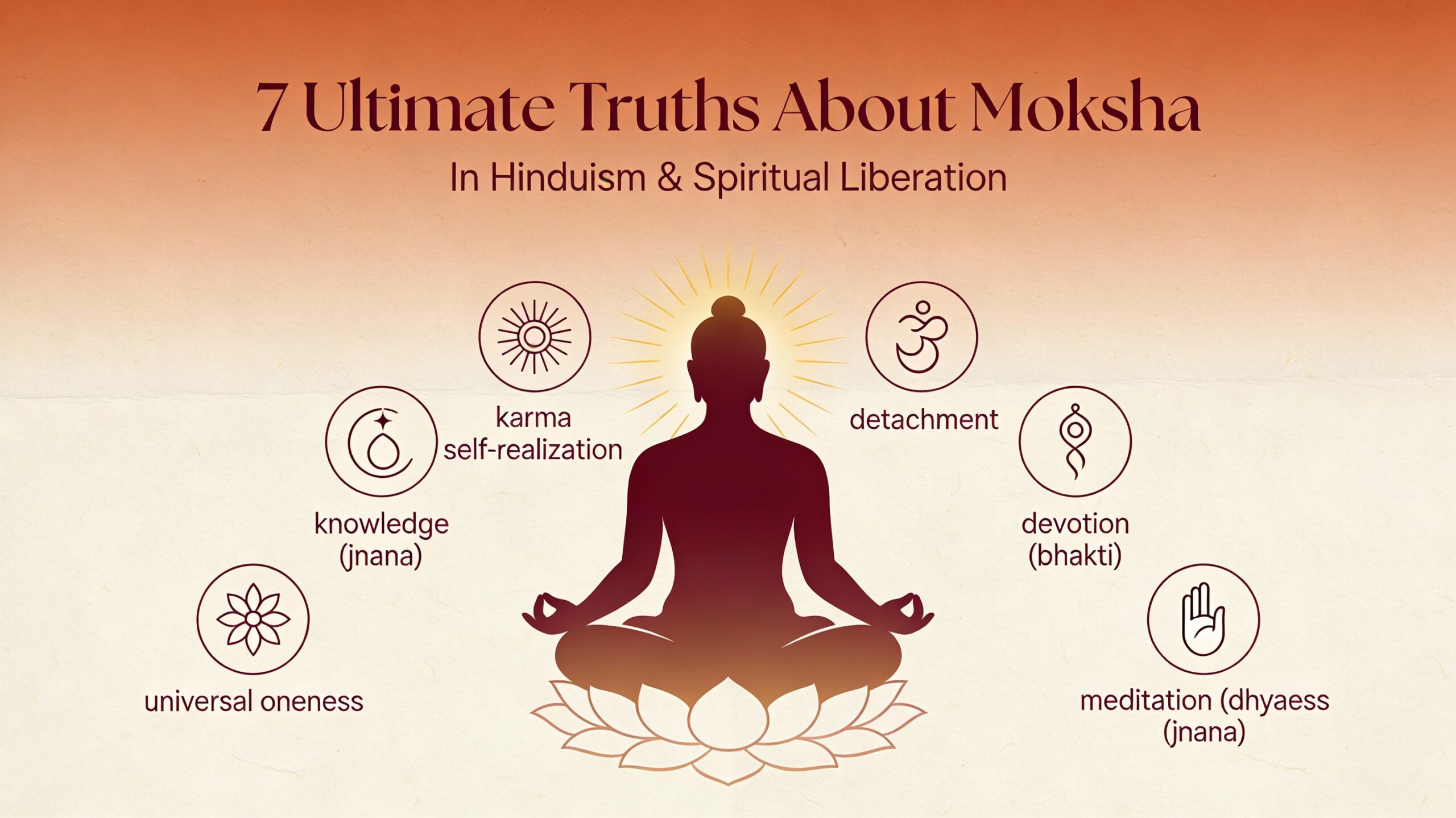
7 Ultimate Truths About Moksha in Hinduism & Spiritual Liberation

7 Ultimate Truths About Moksha in Hinduism & Spiritual Liberation

Moksha in Hinduism – The Ultimate Guide to Spiritual Liberation Introduction Moksha in Hinduism is the ultimate spiritual goal of human life. From ancient scriptures like the Upanishads and Bhagavad Gita to modern spiritual teachings, Moksha represents freedom of the soul from the endless cycle of birth, death, and rebirth. Many people today search for the true meaning of Moksha in Hinduism, especially during times of loss, spiritual confusion, or when performing last rites for loved ones. Understanding Moksha helps one live a meaningful, balanced, and spiritually aware life. What Is Moksha in Hinduism? In Hindu philosophy, Moksha in Hinduism means the liberation of the soul (Atma) from Samsara, the continuous cycle of birth (Janma), death (Mrityu), and rebirth (Punarjanma). When a soul attains Moksha: Unlike heaven (Swarga), which is temporary, Moksha is permanent liberation. Meaning of Moksha According to Hindu Scriptures Hinduism teaches that life is not random. Every soul carries karmic impressions from past lives. MoThe meaning of Moksha is explained in various Hindu texts: All scriptures agree that Moksha in Hinduism is achieved by dissolving ego and ignorance. Why Is Moksha Important in Hinduism? Hinduism defines four major life goals known as Purusharthas: Among these, Moksha in Hinduism is considered the highest because it frees the soul forever. Without Moksha, the soul continues to experience suffering through repeated births. Different Paths to Moksha in Hinduism Hindu philosophy offers multiple paths so that every individual can attain Moksha according to their nature. 🔹 Karma Yoga – Path of Action Selfless service without attachment to results purifies karma and leads to Moksha prapti. 🔹 Bhakti Yoga – Path of Devotion Loving devotion toward God through prayer, chanting, and surrender is one of the easiest paths to Moksha in Hinduism. 🔹 Jnana Yoga – Path of Knowledge By realizing the difference between the eternal soul and temporary body, one attains spiritual liberation. 🔹 Raja Yoga – Path of Meditation Through meditation, discipline, and control of the mind, one reaches self-realization and Moksha.hly life. Moksha After Death: What Happens to the Soul? According to Hindu beliefs: Thus, rituals play an important role in supporting Moksha after death How Can One Attain Moksha in Daily Life? Achieving Moksha in Hinduism is not limited to saints alone. A householder can also progress by: Moksha prapti is a gradual spiritual evolution. Conclusion Moksha in Hinduism is not just about life after death—it is about living with awareness, compassion, and spiritual wisdom. By understanding the meaning of Moksha and following dharma, every individual can move closer to liberation and eternal peace. In Hindu belief, the soul’s journey toward liberation is supported by proper rituals and spiritual understanding. Performing sacred rites such as अध्यात्म तत्व ज्ञान क्या है? helps the soul detach from the physical body and move peacefully toward its next destination. Ancient scriptures like the Bhagavad Gita on Moksha explain that true liberation comes when one is freed from karmic bondage through selfless action, devotion, and spiritual wisdom.

7 Ultimate Truths About Moksha in Hinduism & Spiritual Liberation Read More »

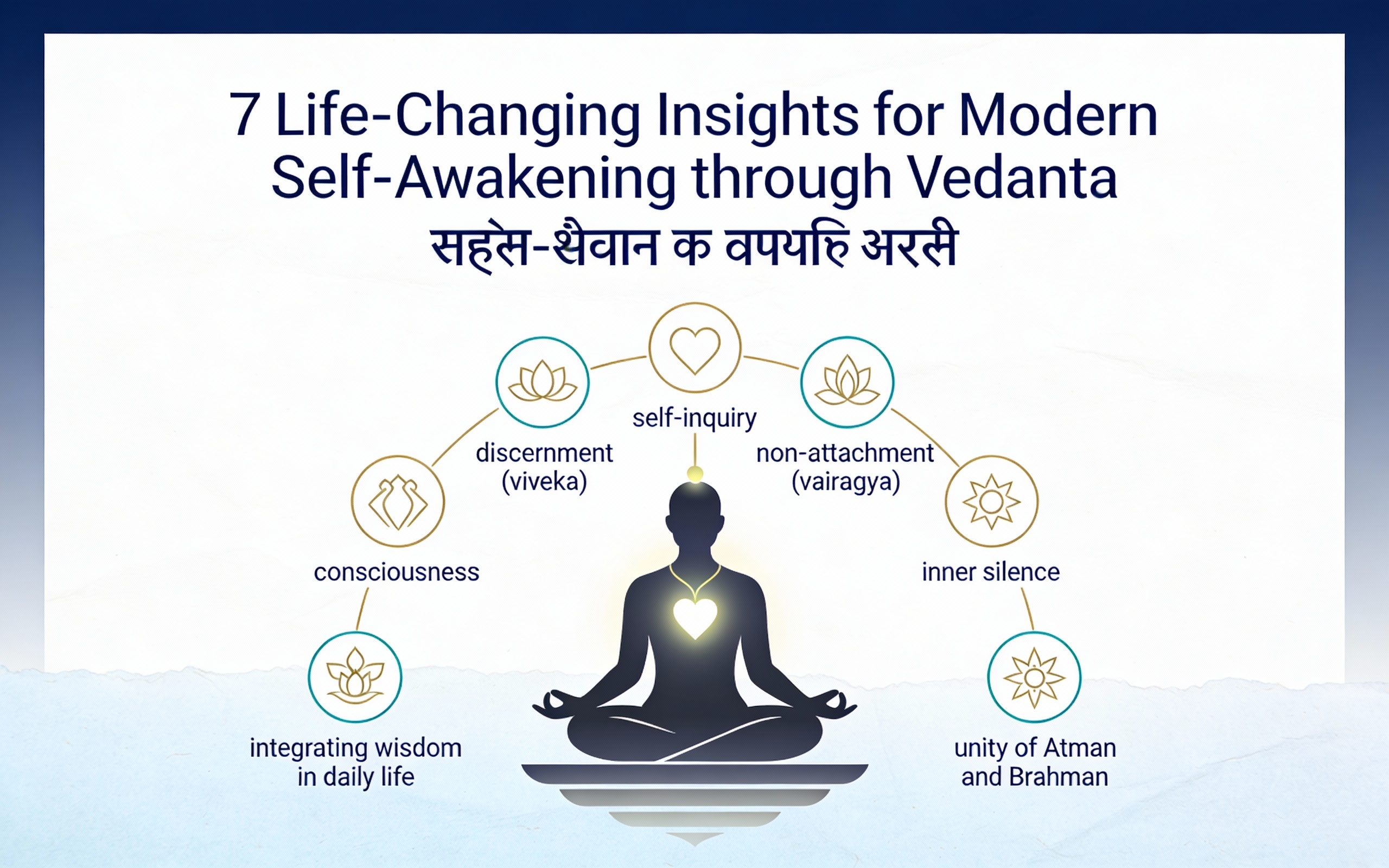
7 Life-Changing Insights for Modern Self-Awakening through Vedanta स्वयं-चेतना का आधुनिक जागरण7 Life-Changing Insights for Modern Self-Awakening through Vedanta स्वयं-चेतना का आधुनिक जागरण

7 Powerful Truths of Modern Self-Awakening through Vedanta

Modern Self-Awakening through Vedanta – A Path to Inner Awareness Introduction Modern Self-Awakening through Vedanta offers a timeless yet practical solution for today’s restless and overburdened mind. In an age driven by speed, ambition, and constant digital stimulation, people often feel disconnected from their inner peace. Vedanta gently reminds us of an eternal truth — “Aham Brahmasmi” (I Am That) — the divine reality we seek outside already exists within us. वेदांत के माध्यम से आधुनिक स्वयं-चेतना केवल दर्शन नहीं, बल्कि आज के जीवन के लिए एक व्यावहारिक मार्ग है जो शांति, जागरूकता और उद्देश्य प्रदान करता है। Understanding Modern Self-Awakening through Vedanta At its core, Modern Self-Awakening through Vedanta teaches that you are not the body, nor the mind, but the witnessing consciousness observing both. When sages like Nisargadatta Maharaj declared “I Am That,” they pointed toward this eternal awareness beyond identity and ego. यह अनुभूति वेदांत की आत्मा है — स्वयं को शरीर और विचारों से अलग जानना। Why Modern Self-Awakening through Vedanta Is Relevant Today Despite success and comfort, many people feel anxious, empty, or directionless. Modern life has mastered technology but neglected inner awareness. Modern Self-Awakening through Vedanta bridges this gap by teaching that fulfillment is not something to achieve but something to realize. वेदांत हमें सिखाता है कि तुम पहले से ही पूर्ण हो — केवल उसे पहचानने की आवश्यकता है। 7 Practical Ways to Practice Modern Self-Awakening through Vedanta 1️⃣ Observe the Mind Watch thoughts arise and dissolve. Recognize that you are the observer, not the thought.मन को देखें — यही आत्मबोध की शुरुआत है। 2️⃣ Practice Silence (Mauna) Daily silence calms the mind and reconnects you with awareness.मौन चेतना का प्रवेश द्वार है। 3️⃣ Self-Inquiry: “Who Am I?” This Vedantic question dissolves false identity and reveals the true Self.“मैं कौन हूँ?” — यही आत्म-जागरण का प्रश्न है। 4️⃣ Selfless Service (Seva) Serving without expectation reduces ego and strengthens unity.निष्काम सेवा अहंकार को समाप्त करती है। 5️⃣ Meditation and Awareness Meditation stabilizes the mind and allows direct experience of consciousness.ध्यान वेदांत का केंद्र है। 6️⃣ Detachment from Results Perform actions sincerely but surrender outcomes.फल त्याग ही स्वतंत्रता है। 7️⃣ Live Consciously Walking, eating, working — every act can become meditation.हर क्षण जागरूकता संभव है। Vedanta, Moksha, and Inner Liberation The ultimate aim of Vedanta is Moksha, liberation from ignorance and suffering. Modern Self-Awakening through Vedanta naturally leads toward Moksha by dissolving false identification with the ego. Even sacred rites like Hindu Antyeshti rituals emphasize remembrance of the eternal Self beyond the physical body. Scriptures such as the Bhagavad Gita on Self-Realization affirm that the soul is unborn, eternal, and indestructible. From Knowledge to Experience Reading about Modern Self-Awakening through Vedanta is the beginning. Living it is the transformation. When one realizes the same consciousness exists in all beings, compassion, humility, and peace arise naturally. वेदांत का लक्ष्य ज्ञान नहीं, बल्कि प्रत्यक्ष अनुभव है। Conclusion Modern Self-Awakening through Vedanta is not about escaping modern life but awakening within it. You do not need to become someone new — you only need to remember who you already are. When this realization dawns, life itself becomes meditation, and peace becomes your natural state. वेदांत के माध्यम से आधुनिक स्वयं-चेतना जीवन को शांति और अर्थ प्रदान करती है। 📌Author & SEO Info Author: Sandeep KumarCategory: Vedanta & Consciousness SEO Keywords Used Naturally:Self-Realization, Vedanta, I Am That, Consciousness, Meditation, Awareness, Moksha, Modern Spirituality The teachings of Vedanta guide seekers toward self-realization by reminding them of their eternal nature beyond body and mind. Practices that support this awareness, along with sacred duties and rites such as तुलसीदास जी की शिक्षाएँ, help reinforce detachment and remembrance of the true Self. Ancient scriptures like the Bhagavad Gita on Self-Realization affirm that the soul is eternal and unaffected by birth or death.

7 Powerful Truths of Modern Self-Awakening through Vedanta Read More »

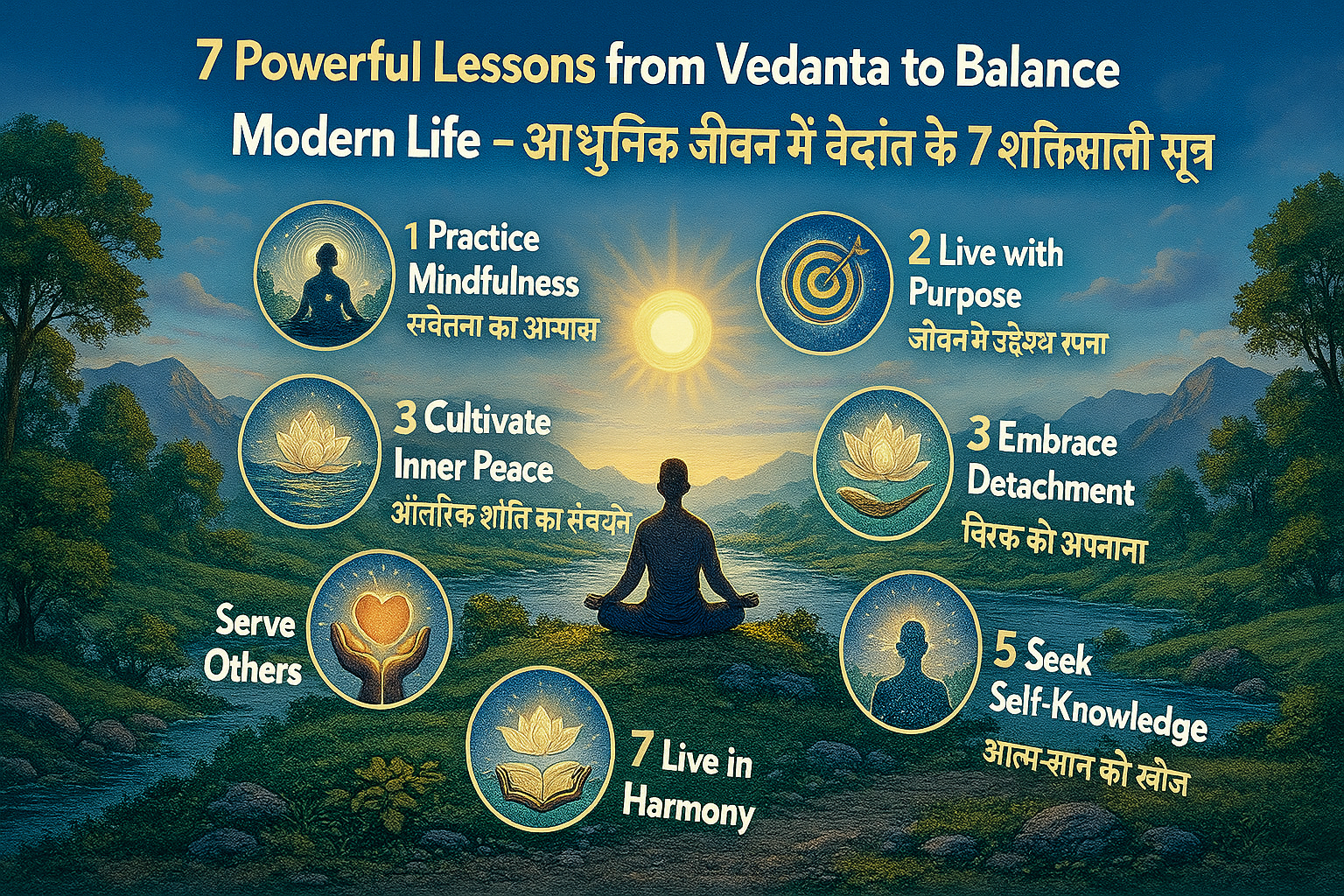
Lessons from Vedanta to Balance Modern Life

7 Powerful Lessons from Vedanta to Balance Modern Life | आधुनिक जीवन में वेदांत के 7 शक्तिशाली सूत्र

परिचय Lessons from Vedanta to Balance Modern Life आज के समय में अत्यंत प्रासंगिक हैं। तेज़ रफ़्तार और तनाव से भरे आधुनिक जीवन में वेदांत हमें शांति, स्पष्टता और उद्देश्य प्रदान करता है। इसकी शिक्षाएँ हमें मानसिक संतुलन बनाए रखने, संबंधों को मजबूत करने और जीवन को सार्थक ढंग से जीने में मदद करती हैं। 1. आत्मा ही शांति का स्रोत है Lessons from Vedanta to Balance Modern Life का पहला सूत्र है — यह समझना कि सच्ची शांति हमारे भीतर है। बाहरी उपलब्धियाँ और भौतिक वस्तुएँ क्षणिक सुख देती हैं, लेकिन स्थायी आनंद केवल आत्मिक जागरूकता से मिलता है। जब हम अपने भीतर की ओर देखते हैं, तभी वास्तविक स्थिरता और सुकून प्राप्त होता है। 2. आत्म-जागरूकता का अभ्यास करें वेदांत सिखाता है कि स्वयं को जानना ही जीवन का सबसे बड़ा ज्ञान है। Lessons from Vedanta to Balance Modern Life के अनुसार, जब हम अपने विचारों और भावनाओं को बिना निर्णय लिए देखते हैं, तो हम अपनी वास्तविक पहचान समझते हैं। यह अभ्यास मन की शांति और स्पष्टता लाता है। 3. अनासक्ति का मार्ग अपनाएं Lessons from Vedanta to Balance Modern Life में एक प्रमुख शिक्षा है — अनासक्ति। इसका अर्थ जीवन से भागना नहीं, बल्कि सजगता से जीना है। जब हम परिणामों के मोह से मुक्त होकर कर्म करते हैं, तो हमारा मन हल्का और स्थिर रहता है। यही सच्चे संतुलन का आधार है। 4. कर्मयोग का सिद्धांत Lessons from Vedanta to Balance Modern Life का चौथा सूत्र है — कर्मयोग। इसका अर्थ है निःस्वार्थ भाव से कर्म करना। जब हम फल की चिंता छोड़कर केवल अपने कर्तव्य पर ध्यान केंद्रित करते हैं, तो तनाव कम होता है और आत्म-संतोष बढ़ता है। यह संतुलित जीवन जीने की कुंजी है। 5. संतुलित जीवनशैली अपनाएं वेदांत संयम और संतुलन पर बल देता है। Lessons from Vedanta to Balance Modern Life सिखाता है कि चाहे काम हो, भोजन हो या संबंध — हर क्षेत्र में मध्यम मार्ग अपनाना ही सर्वोत्तम है। अति हमेशा असंतुलन लाती है, जबकि सजगता जीवन में स्थिरता देती है। 6. करुणा और क्षमा का अभ्यास करें करुणा और क्षमा जीवन में प्रेम और सामंजस्य लाने की चाबियाँ हैं। Lessons from Vedanta to Balance Modern Life में यह बताया गया है कि जब हम दूसरों के प्रति सहानुभूति और क्षमा का भाव रखते हैं, तो हमारे संबंध मजबूत होते हैं और मन में शांति आती है। यह सामाजिक सामंजस्य और व्यक्तिगत विकास दोनों के लिए आवश्यक है। 7. आत्म-साक्षात्कार की ओर यात्रा Lessons from Vedanta to Balance Modern Life का अंतिम और सर्वोच्च सूत्र है — आत्म-साक्षात्कार। यह समझना कि हम केवल शरीर या मन नहीं, बल्कि परम चेतना का अंश हैं। जब यह अनुभूति होती है, तब जीवन में सच्चा संतुलन, आनंद और स्वतंत्रता प्राप्त होती है। निष्कर्ष ये 7 Powerful Lessons from Vedanta to Balance Modern Life आधुनिक मनुष्य के लिए एक मार्गदर्शक की तरह हैं। इन शिक्षाओं को अपनाकर हम तनावमुक्त, जागरूक और उद्देश्यपूर्ण जीवन जी सकते हैं। वेदांत हमें सिखाता है कि सच्चा संतुलन बाहर नहीं, हमारे भीतर है — और जब हम भीतर शांत होते हैं, तभी बाहरी जीवन भी सामंजस्यपूर्ण बनता है। ये 7 Powerful Lessons from Vedanta to Balance Modern Life आधुनिक मनुष्य के लिए मार्गदर्शक की तरह हैं। इन शिक्षाओं को अपनाकर हम तनावमुक्त, जागरूक और उद्देश्यपूर्ण जीवन जी सकते हैं। वेदांत हमें सिखाता है कि सच्चा संतुलन बाहर नहीं, हमारे भीतर है — और जब हम भीतर शांत होते हैं, तभी बाहरी जीवन भी सामंजस्यपूर्ण बनता है। इन सिद्धांतों को रोजमर्रा की जिंदगी में अपनाने से मानसिक स्पष्टता बढ़ती है, निर्णय लेने में संतुलन आता है, और रिश्तों में मजबूती आती है। यह केवल जीवन को सुगम नहीं बनाता, बल्कि आत्मिक आनंद और स्थायी शांति भी प्रदान करता है। Read Our new Blog : 7 Shocking Facts Why Mount Kailash Unclimbable is Considered Sacred | Spiritual Belief vs Science For Website Designing : Evaa Technologies

7 Powerful Lessons from Vedanta to Balance Modern Life | आधुनिक जीवन में वेदांत के 7 शक्तिशाली सूत्र Read More »

Connection Between Soul & Supreme

7 Powerful Truths Revealing the Connection Between Soul & Supreme | आत्मा और परमात्मा का संबंध

आत्मा और परमात्मा का संबंध | The Connection Between Soul & Supreme परिचय | Introduction The Connection Between Soul and Supreme is one of the most profound concepts in Indian philosophy. It explains the eternal bond between the individual self and the universal consciousness. Understanding this connection leads to inner peace, self-realization, and liberation. आत्मा और परमात्मा का संबंध भारतीय दर्शन के सबसे गहन विषयों में से एक है। यह व्यक्तिगत आत्मा और सार्वभौमिक चेतना के बीच के शाश्वत संबंध को स्पष्ट करता है। इस संबंध की समझ हमें आंतरिक शांति, आत्म-साक्षात्कार और मुक्ति की ओर ले जाती है। 1. आत्मा और परमात्मा की एकता | Oneness of Soul and Supreme According to Vedanta, the soul (Atma) and the Supreme (Parmatma) are not separate. The Connection Between Soul and Supreme reveals that both are the same divine essence, differing only due to ignorance (Avidya). वेदांत के अनुसार आत्मा और परमात्मा अलग नहीं हैं। आत्मा और परमात्मा का संबंध यह बताता है कि दोनों एक ही दिव्य तत्व हैं, केवल अज्ञान (अविद्या) के कारण भिन्न दिखाई देते हैं। 2. आत्मा का शाश्वत स्वरूप | Eternal Nature of the Soul English:The soul is eternal, pure, and unchanging. Understanding the Connection Between Soul and Supreme reminds us that our true nature is beyond birth and death.Hindi:आत्मा शाश्वत, पवित्र और अपरिवर्तनीय है। आत्मा और परमात्मा का संबंध समझने से हमें यह बोध होता है कि हमारा वास्तविक स्वरूप जन्म और मृत्यु से परे है। 3. माया और अज्ञान की भूमिका | Role of Maya and Ignorance Ignorance (Maya) creates the illusion of separation between the soul and the Supreme. Realizing the truth destroys illusion and unites us with divine consciousness. अज्ञान या माया आत्मा और परमात्मा के बीच अलगाव का भ्रम उत्पन्न करती है। जब सत्य का ज्ञान होता है, तो यह भ्रम नष्ट हो जाता है और हम दिव्य चेतना से एक हो जाते हैं। 4. ध्यान और भक्ति का महत्व | Power of Meditation and Devotion Meditation and devotion are two essential paths to experience the Connection Between Soul and Supreme. Through these practices, one transcends the ego and feels divine unity. ध्यान और भक्ति आत्मा और परमात्मा के संबंध का अनुभव करने के दो प्रमुख मार्ग हैं। इन साधनों से व्यक्ति अहंकार से परे होकर दिव्य एकत्व का अनुभव करता है। 5. कर्म और आत्म-साक्षात्कार | Karma and Self-Realization By performing selfless actions and understanding the Connection Between Soul and Supreme, we purify the mind and move closer to self-realization. निष्काम कर्म और आत्मा-परमात्मा के संबंध की समझ से हमारा मन शुद्ध होता है और हम आत्म-साक्षात्कार की दिशा में अग्रसर होते हैं। 6. वेदांत का दृष्टिकोण | Vedantic Perspective Vedanta declares, “Aham Brahmasmi” – I am Brahman. This is the ultimate realization of the Connection Between Soul and Supreme, where the seeker realizes his divine nature. वेदांत कहता है — “अहम् ब्रह्मास्मि” अर्थात् “मैं ही ब्रह्म हूँ।” यह आत्मा और परमात्मा के संबंध की अंतिम अनुभूति है, जहाँ साधक अपनी दिव्यता को पहचानता है। 7. मुक्ति की प्राप्ति | Attaining Liberation (Moksha) When we truly understand the Connection Between Soul and Supreme, all dualities end. The soul attains liberation, freedom from birth, death, and suffering. जब हम वास्तव में आत्मा और परमात्मा का संबंध समझ लेते हैं, तो सभी द्वैत समाप्त हो जाते हैं। आत्मा को मुक्ति प्राप्त होती है — जन्म, मृत्यु और दुखों से पूर्ण स्वतंत्रता। निष्कर्ष | Conclusion The Connection Between Soul and Supreme reveals the essence of existence. By realizing this divine unity through Vedantic wisdom, we experience peace, purpose, and ultimate liberation. आत्मा और परमात्मा का संबंध अस्तित्व के सार को उजागर करता है। वेदांत की शिक्षाओं के माध्यम से इस दिव्य एकत्व का अनुभव करके हम शांति, उद्देश्य और परम मुक्ति प्राप्त करते हैं। Read Our new Blog : 7 Shocking Facts Why Mount Kailash Unclimbable is Considered Sacred | Spiritual Belief vs Science For Website Designing : Evaa Technologies

7 Powerful Truths Revealing the Connection Between Soul & Supreme | आत्मा और परमात्मा का संबंध Read More »

7 Powerful Ways to Develop आत्म-अनुशासन (Self-Discipline) धर्म और योग की दृष्टि से

7 Powerful Ways to Develop आत्म-अनुशासन Self-Discipline: धर्म और योग की दृष्टि से”| 7 प्रभावशाली उपाय आत्म-अनुशासन Self-Discipline का विकास करने के लिए — धर्म और योग की दृष्टि से

Introduction | परिचय आत्म-अनुशासन Self-Discipline जीवन की आत्मिक, मानसिक और शारीरिक प्रगति का मूल स्तंभ है। हर महान साधक, योगी या धर्मानुयायी ने अपने जीवन में अनुशासन को सर्वोच्च स्थान दिया है। आज की भागदौड़ भरी दुनिया में, जहाँ मनुष्य बाहरी सुखों में उलझ गया है, वहीं आत्म-अनुशासन Self-Discipline हमें आंतरिक स्थिरता और जागरूकता की ओर ले जाता है। धर्म और योग के सिद्धांत इस आत्म-अनुशासन को विकसित करने का मार्ग बताते हैं, जिससे व्यक्ति जीवन में संतुलन और शांति प्राप्त करता है। Meaning of आत्म-अनुशासन Self-Discipline | What It Truly Means आत्म-अनुशासन Self-Discipline का अर्थ केवल नियंत्रण नहीं बल्कि आत्म-ज्ञान की दिशा में एक यात्रा है। यह अपने विचारों, भावनाओं और कर्मों को सही दिशा में लगाने की प्रक्रिया है। जब व्यक्ति अपने भीतर के विकारों — क्रोध, लोभ, और मोह — पर नियंत्रण करना सीखता है, तभी सच्चे आत्म-अनुशासन का विकास होता है। यह जीवन के हर क्षेत्र में सफलता, संतुलन और शांति लाता है। योग दर्शन कहता है — “योगः चित्तवृत्ति निरोधः” अर्थात् योग मन की वृत्तियों का निरोध है, और यह तभी संभव है जब व्यक्ति आत्म-अनुशासित हो। Dharma’s Perspective on आत्म-अनुशासन Self-Discipline सनातन धर्म में आत्म-अनुशासन Self-Discipline को धर्माचरण का मूल तत्व माना गया है। भगवद गीता में श्रीकृष्ण कहते हैं — “जो अपने इंद्रियों और मन को वश में रखता है, वही सच्चा योगी है।” धर्म सिखाता है कि अनुशासन केवल बाहरी नियमों का पालन नहीं, बल्कि अपने अंतरमन की शुद्धि का साधन है। जब व्यक्ति सत्य, अहिंसा, करुणा, और संयम जैसे धर्मिक मूल्यों को अपनाता है, तो उसका जीवन सहज रूप से अनुशासित हो जाता है। आत्म-अनुशासन व्यक्ति को भोग से योग की ओर, और मोह से मोक्ष की ओर ले जाता है — यही धर्म का सच्चा संदेश है। Yoga and the Development of आत्म-अनुशासन Self-Discipline योग आत्म-नियंत्रण का विज्ञान है। पतंजलि के अष्टांग योग के प्रथम दो अंग — यम और नियम — आत्म-अनुशासन Self-Discipline की नींव रखते हैं। इन सिद्धांतों का अभ्यास करने से व्यक्ति का मन स्थिर होता है, इच्छाएँ नियंत्रित होती हैं और जीवन में सहज अनुशासन विकसित होता है। नियमित ध्यान (meditation) और प्राणायाम (breath control) अभ्यास से आत्म-नियंत्रण की शक्ति बढ़ती है। योग का अंतिम लक्ष्य आत्म-साक्षात्कार है, और आत्म-अनुशासन उसकी पहली सीढ़ी। Practical Ways to Develop आत्म-अनुशासन Self-Discipline Conclusion | निष्कर्ष आत्म-अनुशासन Self-Discipline कोई बंधन नहीं, बल्कि आत्म-मुक्ति का द्वार है। धर्म हमें नैतिक दिशा देता है और योग हमें उस दिशा में चलने की साधना सिखाता है। जब मन, वाणी और कर्म में संतुलन आता है, तब जीवन में शांति, सफलता और आत्म-साक्षात्कार स्वतः प्रकट होता है। जो व्यक्ति आत्म-अनुशासन Self-Discipline को जीवन का आधार बनाता है, वह न केवल बाहरी सफलता प्राप्त करता है बल्कि भीतर से पूर्णता और ईश्वरीय आनंद का अनुभव करता है। यही धर्म और योग की सच्ची दृष्टि है। Read our more Blogs : आधुनिक जीवन में वेदांत का महत्व: कैसे हमें संतुलन प्राप्त हो सकता है | Importance of Vedanta in Modern Life: How We Can Achieve Balance For Website Designing : Evaa Technologies

7 Powerful Ways to Develop आत्म-अनुशासन Self-Discipline: धर्म और योग की दृष्टि से”| 7 प्रभावशाली उपाय आत्म-अनुशासन Self-Discipline का विकास करने के लिए — धर्म और योग की दृष्टि से Read More »

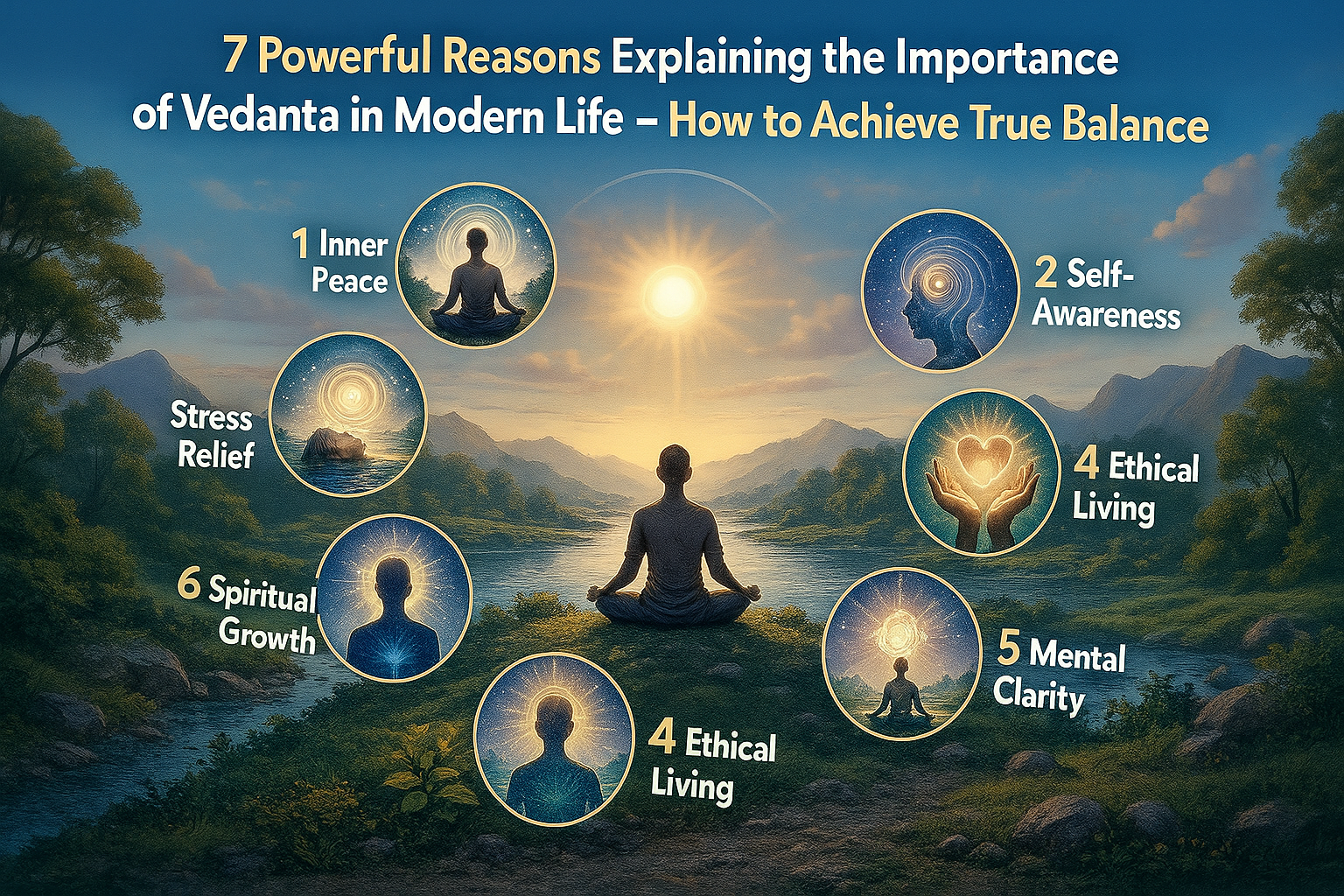
Importance of Vedanta

7 Powerful Reasons Explaining the Importance of Vedanta in Modern Life: How We Can Achieve Balance | आधुनिक जीवन में वेदांत का महत्व: कैसे हमें संतुलन प्राप्त हो सकता है

आधुनिक जीवन में वेदांत का महत्व: कैसे हमें संतुलन प्राप्त हो सकता है परिचय | Introduction The Focus Keyword Importance of Vedanta in Modern Life is highly relevant in today’s world where people face stress, anxiety, and confusion daily. Vedanta provides timeless wisdom that helps us bring balance to modern living. आधुनिक जीवन में वेदांत का महत्व आज के समय में अत्यधिक प्रासंगिक है, जब लोग प्रतिदिन तनाव, चिंता और असमंजस का सामना करते हैं। वेदांत की शाश्वत शिक्षाएं हमें आधुनिक जीवन में संतुलन बनाने में मदद करती हैं। 1. मानसिक शांति | Mental Peace One of the biggest benefits of Vedanta is inner peace. In the modern world, we seek happiness outside, but Vedanta reminds us that peace lies within. वेदांत का सबसे बड़ा लाभ मानसिक शांति है। आधुनिक जीवन में लोग खुशी बाहर ढूंढते हैं, लेकिन वेदांत हमें याद दिलाता है कि शांति हमारे भीतर ही है। 2. आत्म-जागरूकता और पहचान | Self-Awareness and Identity The Importance of Vedanta in Modern Life lies in its ability to awaken self-awareness. It teaches us to recognize our true identity beyond material success. आधुनिक जीवन में वेदांत का महत्व आत्म-जागरूकता जगाने में है। यह हमें भौतिक सफलता से परे हमारी वास्तविक पहचान समझने की शिक्षा देता है। 3. तनाव प्रबंधन और स्वस्थ जीवन | Stress Management and Healthy Living Vedanta shows us how to detach from unnecessary worries, which reduces stress and improves health. In a world full of pressure, its principles bring relief. वेदांत हमें अनावश्यक चिंताओं से दूर रहने की शिक्षा देता है, जिससे तनाव कम होता है और स्वास्थ्य सुधरता है। दबाव से भरी दुनिया में इसके सिद्धांत राहत प्रदान करते हैं। 4. जीवन का उद्देश्य और दिशा | Purpose and Direction of Life Many people feel lost despite achieving material goals. The Importance of Vedanta in Modern Life is that it gives direction and purpose, making life more meaningful. कई लोग भौतिक सफलता प्राप्त करने के बाद भी दिशाहीन महसूस करते हैं। आधुनिक जीवन में वेदांत का महत्व यह है कि यह जीवन को दिशा और उद्देश्य देता है, जिससे अस्तित्व सार्थक बनता है। 5. संतुलित संबंध और सामंजस्य | Balanced Relationships and Harmony Vedanta teaches compassion, patience, and forgiveness. These qualities strengthen relationships and create harmony in families and society. वेदांत करुणा, धैर्य और क्षमा की शिक्षा देता है। ये गुण संबंधों को मजबूत बनाते हैं और परिवार व समाज में सामंजस्य लाते हैं। 6. कार्य और जीवन में संतुलन | Work-Life Balance The modern lifestyle often creates imbalance between work and personal life. Vedanta emphasizes moderation, helping us balance both effectively. आधुनिक जीवनशैली में काम और निजी जीवन का संतुलन बिगड़ जाता है। वेदांत संयम पर बल देता है और हमें दोनों को प्रभावी रूप से संतुलित करने में मदद करता है। 7. आध्यात्मिक विकास और आत्म-साक्षात्कार | Spiritual Growth and Self-Realization Beyond material progress, Vedanta helps us grow spiritually. The ultimate Importance of Vedanta in Modern Life is guiding us towards self-realization. भौतिक प्रगति से आगे, वेदांत हमें आध्यात्मिक विकास की ओर ले जाता है। आधुनिक जीवन में वेदांत का महत्व हमें आत्म-साक्षात्कार की दिशा में मार्गदर्शन करना है। निष्कर्ष | Conclusion The Importance of Vedanta in Modern Life is undeniable. It offers tools to handle stress, achieve balance, and live purposefully. By applying its wisdom, we can transform our thoughts, relationships, and lifestyle. आधुनिक जीवन में वेदांत का महत्व असंदिग्ध है। यह हमें तनाव से निपटने, संतुलन प्राप्त करने और उद्देश्यपूर्ण जीवन जीने के साधन प्रदान करता है। इसकी शिक्षाओं को अपनाकर हम अपने विचारों, संबंधों और जीवनशैली को बदल सकते हैं। Read Our new Blog : 7 Shocking Facts Why Mount Kailash Unclimbable is Considered Sacred | Spiritual Belief vs Science For Website Designing : Evaa Technologies

7 Powerful Reasons Explaining the Importance of Vedanta in Modern Life: How We Can Achieve Balance | आधुनिक जीवन में वेदांत का महत्व: कैसे हमें संतुलन प्राप्त हो सकता है Read More »

7 Powerful Reasons Why Aadhunik Jeevan me Vedant ka Mahatva Can Bring Balance & Peace

7 Powerful Reasons Why Aadhunik Jeevan me Vedant ka Mahatva Can Bring Balance & Peace

7 Powerful Reasons Why Aadhunik Jeevan me Vedant ka Mahatva Can Bring Balance & Peace Introduction Vedant philosophy offers timeless wisdom that helps individuals navigate life’s challenges with clarity and peace.वेदांत दर्शन शाश्वत ज्ञान प्रदान करता है, जो व्यक्ति को जीवन की चुनौतियों का सामना स्पष्टता और शांति के साथ करने में मदद करता है। In today’s busy and stressful life, Vedant provides tools to restore balance, peace, and stability.आज की व्यस्त और तनावपूर्ण जीवनशैली में, वेदांत संतुलन, शांति और स्थिरता लाने के साधन प्रदान करता है। 1. Reduces Stress Vedant teaches detachment from unnecessary worries, helping the mind stay calm under pressure.वेदांत अनावश्यक चिंताओं से विरक्ति सिखाता है, जिससे मन दबाव में भी शांत रहता है। This makes it very useful for those facing workplace and personal stress daily.यह उन लोगों के लिए अत्यधिक उपयोगी है जो रोज़ाना कार्यस्थल और व्यक्तिगत तनाव का सामना करते हैं। 2. Enhances Clarity Vedant philosophy provides clear understanding of life’s purpose and values.वेदांत दर्शन जीवन के उद्देश्य और मूल्यों की स्पष्ट समझ प्रदान करता है। By removing confusion, it helps people take better decisions and become more self-aware.भ्रम दूर करके, यह लोगों को बेहतर निर्णय लेने और अधिक आत्म-जागरूक बनने में मदद करता है। 3. Builds Inner Strength Vedant encourages self-realization, which builds confidence and inner power.वेदांत आत्म-साक्षात्कार को प्रोत्साहित करता है, जो आत्मविश्वास और आंतरिक शक्ति का निर्माण करता है। Therefore, Aadhunik Jeevan me Vedant ka Mahatva is seen in its ability to make individuals resilient.इसलिए, आधुनिक जीवन में वेदांत का महत्व इसकी उस क्षमता में है जो व्यक्ति को दृढ़ बनाती है। 4. Creates Harmony Vedant emphasizes unity of all beings, reducing conflicts and promoting harmony.वेदांत सभी प्राणियों की एकता पर ज़ोर देता है, जिससे संघर्ष कम होते हैं और सामंजस्य बढ़ता है। Thus, it inspires peace and cooperation in families, workplaces, and communities.इस प्रकार, यह परिवारों, कार्यस्थलों और समुदायों में शांति और सहयोग को प्रेरित करता है। 5. Develops Mindfulness Vedant teaches living in the present moment, which prevents overthinking and stress.वेदांत वर्तमान क्षण में जीना सिखाता है, जो अधिक सोचने और तनाव को रोकता है। Practicing this shows why Aadhunik Jeevan me Vedant ka Mahatva remains practical for daily life.इसका अभ्यास दिखाता है कि आधुनिक जीवन में वेदांत का महत्व दैनिक जीवन के लिए कितना व्यावहारिक है। 6. Supports Spiritual Growth Vedant connects individuals to their higher self, promoting spiritual awareness.वेदांत व्यक्ति को उसके उच्चतर आत्म से जोड़ता है, जिससे आध्यात्मिक जागरूकता बढ़ती है। This balance of material and spiritual life is what makes Vedant timeless.भौतिक और आध्यात्मिक जीवन का यह संतुलन वेदांत को शाश्वत बनाता है। 7. Brings Lasting Peace Vedant emphasizes self-control, compassion, and detachment, which lead to lasting peace.वेदांत आत्म-नियंत्रण, करुणा और विरक्ति पर ज़ोर देता है, जो स्थायी शांति की ओर ले जाते हैं। Hence, Aadhunik Jeevan me Vedant ka Mahatva is reflected in its power to bring inner balance and joy.इस प्रकार, आधुनिक जीवन में वेदांत का महत्व उसके आंतरिक संतुलन और आनंद प्रदान करने की क्षमता में झलकता है। Conclusion Aadhunik Jeevan me Vedant ka Mahatva is undeniable as it provides guidance to live with wisdom, peace, and balance.आधुनिक जीवन में वेदांत का महत्व अस्वीकार नहीं किया जा सकता क्योंकि यह ज्ञान, शांति और संतुलन के साथ जीने का मार्गदर्शन प्रदान करता है। By applying Vedantic principles, modern individuals can create harmony within and around them.वेदांतिक सिद्धांतों को अपनाकर, आधुनिक व्यक्ति अपने भीतर और आसपास सामंजस्य स्थापित कर सकते हैं। Read Our More Blogs Like :- 7 Powerful Scientific Benefits of Yoga and Meditation for Brain & Body For Website Designing Contact : Evaa technologies

7 Powerful Reasons Why Aadhunik Jeevan me Vedant ka Mahatva Can Bring Balance & Peace Read More »

Scientific Benefits of Yoga and Meditation Effects on Brain & Body

7 Powerful Scientific Benefits of Yoga and Meditation for Brain & Body

Scientific Benefits of Yoga and Meditation: Effects on Brain & Body Introduction Yoga and meditation are not just spiritual practices; modern science has proven their deep impact on both the brain and body.योग और ध्यान केवल आध्यात्मिक साधनाएँ नहीं हैं; आधुनिक विज्ञान ने इनके मस्तिष्क और शरीर पर गहरे प्रभाव को सिद्ध किया है। From reducing stress to improving immunity, the scientific benefits of yoga and meditation have been validated by numerous research studies worldwide.तनाव कम करने से लेकर रोग प्रतिरोधक क्षमता बढ़ाने तक, योग और ध्यान के वैज्ञानिक लाभों को विश्वभर में अनेक शोधों ने प्रमाणित किया है। Scientific Benefits of Yoga and Meditation on Brain Let us explore the scientific benefits of yoga and meditation that positively affect brain health.आइए योग और ध्यान के वैज्ञानिक लाभों को जानें जो मस्तिष्क के स्वास्थ्य पर सकारात्मक असर डालते हैं। Improves Memory and Focus Scientific benefits of yoga and meditation include enhanced concentration, better decision-making, and sharper memory by balancing brain waves.योग और ध्यान के वैज्ञानिक लाभों में ध्यान केंद्रित करने की क्षमता बढ़ना, बेहतर निर्णय लेना और स्मरण शक्ति तेज होना शामिल है। Reduces Stress and Anxiety One of the most researched scientific benefits of yoga and meditation is stress reduction, as they lower cortisol levels and promote calmness.योग और ध्यान का एक प्रमुख वैज्ञानिक लाभ तनाव कम करना है, क्योंकि ये कॉर्टिसोल स्तर को घटाकर शांति प्रदान करते हैं। Boosts Emotional Stability The scientific benefits of yoga and meditation extend to emotional health by increasing grey matter in the brain, leading to inner peace.योग और ध्यान के वैज्ञानिक लाभ भावनात्मक स्थिरता तक पहुँचते हैं, क्योंकि ये मस्तिष्क में ग्रे मैटर बढ़ाकर आंतरिक शांति प्रदान करते हैं। Enhances Creativity and Productivity Another powerful scientific benefit of yoga and meditation is the stimulation of creativity and productivity, helping individuals perform better in personal and professional life.योग और ध्यान का एक और महत्वपूर्ण वैज्ञानिक लाभ रचनात्मकता और उत्पादकता को बढ़ावा देना है, जिससे व्यक्ति व्यक्तिगत और पेशेवर जीवन में बेहतर प्रदर्शन करता है। Scientific Benefits of Yoga and Meditation on Body Along with the mind, scientific benefits of yoga and meditation also transform physical health.मन के साथ-साथ, योग और ध्यान के वैज्ञानिक लाभ शारीरिक स्वास्थ्य को भी परिवर्तित करते हैं। Strengthens Immunity A key scientific benefit of yoga and meditation is strengthening the immune system, making the body more resistant to infections.योग और ध्यान का एक प्रमुख वैज्ञानिक लाभ रोग प्रतिरोधक क्षमता को मजबूत करना है, जिससे शरीर संक्रमणों से लड़ने में सक्षम होता है। Improves Heart Health Scientific benefits of yoga and meditation include lower blood pressure, improved circulation, and better heart function.योग और ध्यान के वैज्ञानिक लाभों में रक्तचाप कम होना, बेहतर रक्त संचार और हृदय की कार्यक्षमता में सुधार शामिल है। Enhances Flexibility & Posture Among the physical scientific benefits of yoga and meditation is improved flexibility, posture, and reduced chronic pain.योग और ध्यान के शारीरिक वैज्ञानिक लाभों में लचीलापन बढ़ना, सही पोस्टर और पुराने दर्द में कमी शामिल है। Supports Better Sleep One of the most noticeable scientific benefits of yoga and meditation is improved sleep quality, as they activate relaxation responses in the nervous system.योग और ध्यान का एक महत्वपूर्ण वैज्ञानिक लाभ नींद की गुणवत्ता में सुधार है, क्योंकि ये स्नायु तंत्र में विश्राम प्रतिक्रिया को सक्रिय करते हैं। Daily Practice for Long-Term Scientific Benefits of Yoga and Meditation Practicing even 20 minutes daily ensures long-lasting scientific benefits of yoga and meditation for brain and body.प्रतिदिन केवल 20 मिनट अभ्यास करने से मस्तिष्क और शरीर पर योग और ध्यान के दीर्घकालिक वैज्ञानिक लाभ मिलते हैं। Consistency is the key—just like exercise shapes the body, regular practice of yoga and meditation reshapes the brain and restores overall health.निरंतरता ही कुंजी है—जैसे व्यायाम शरीर को आकार देता है, वैसे ही योग और ध्यान का नियमित अभ्यास मस्तिष्क को पुनः आकार देता है और संपूर्ण स्वास्थ्य को बहाल करता है। Conclusion The scientific benefits of yoga and meditation prove that these ancient practices are powerful tools for a healthy mind and body. Start today, and experience the transformation within you.योग और ध्यान के वैज्ञानिक लाभ सिद्ध करते हैं कि ये प्राचीन साधनाएँ एक स्वस्थ मन और शरीर के लिए शक्तिशाली उपाय हैं। आज से शुरू करें और अपने भीतर के परिवर्तन का अनुभव करें। Read Our More Blogs Like :- 7 Shocking Facts Why Mount Kailash Unclimbable is Considered Sacred | Spiritual Belief vs Science | Top 5 Ultimate Spiritual Retreats in India 2026 | 2026 में भारत के शीर्ष 5 आध्यात्मिक रिट्रीट स्थल For Website Designing Contact : Evaa technologies

7 Powerful Scientific Benefits of Yoga and Meditation for Brain & Body Read More »

Scroll to Top